Vegan Doenjang Jjigae (Korean Fermented Soybean Stew)

May 20, 2022 • Updated Apr 21, 2025
This page may contain affiliate links, which means I will make a small commission for products purchased through my link.
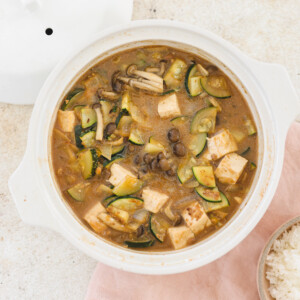
Few things are as comforting as a steaming pot of vegan doenjang jjigae. This staple Korean stew is known for its deep umami flavor, filling your kitchen with rich, savory aromas. Made with fermented soybean paste, tender tofu, and fresh vegetables, it’s a dish that’s both nourishing and satisfying.

Table of Contents
Why You’ll Love This Vegan Doenjang Jjigae Recipe
If you’ve never made a doenjang stew before, this is the perfect place to start. It’s a simple, home-style dish that captures the heart of Korean cooking with bold, fermented depth and satisfying textures. My mum and grandma always told me that warming foods, like this stew, are great for circulation and overall well-being – especially during that time of the month.
With tender tofu, hearty potatoes, and fresh vegetables, every bite is pure comfort. This vegan version keeps things completely plant-based while still delivering the authentic flavors you’d find in a traditional Korean home.
For another dish that balances textures beautifully, try my vegan japchae, where chewy glass noodles meet sautéed vegetables in a savoury-sweet sauce. If you love brothy, umami-rich stews, you might also enjoy my Korean radish soup, a simple but deeply flavorful dish. And if you’re looking for a plant-based take on another classic, this vegan ‘bulgogi’ delivers sweet and smoky flavors with wholesome ingredients.
Ingredients You’ll Need
Here’s a quick rundown of the key ingredients for vegan doenjang jjigae! Be sure to check the recipe card below for the full recipe and exact measurements.

- Plain water or vegan dashi: The base of the stew. If you don’t have dashi, vegetable broth works as a great substitute!
- Kelp: Adds depth and oceanic essence.
- Dried shiitake mushrooms: Provide earthy, complex flavors.
- Potato: Brings a creamy, starchy bite to the stew.
- Zucchini: Adds a mild sweetness and tender texture.
- White or yellow onion: Enhances the base with subtle sweetness.
- Garlic: Delivers warmth and pungency.
- Korean green pepper: Adds a touch of spice and depth to the stew. Adjust to your preference, or add more for extra heat if you enjoy a spicier kick!
- Tofu: Tofu plays a key role in this stew, adding both texture and protein while absorbing the deep, umami-rich flavors of the broth.
- Mushrooms of choice: A few types of mushrooms you can use are enoki, oyster, or button mushrooms.
- Green onion: A fresh, bright garnish.
- Doenjang (Korean fermented soybean paste): Doenjang soybean paste is the key ingredient for this dish, giving it the authentic Korean flavor that makes this stew so comforting and satisfying
How to Make This Recipe
Step 1: Begin by preparing some kelp and dried mushroom stock. If using dashi, you can skip this step. Add mushrooms and kelp to a bowl or pot along with water and let soak for at least an hour, or preferably overnight.
Step 2: Heat 1-2 tbsp of neutral oil in a pot over medium heat. Sauté the potatoes for 2-3 minutes, then add the onions and cook for another 2 minutes until translucent. Stir in the garlic, green onion stem, and pepper, letting everything cook for another 2 minutes until fragrant.
Step 3: Add your broth to the pot and bring the mixture to a boil, then lower to a simmer. Add doenjang paste, making sure it is dissolved into the soup and then your zucchini and tofu. If using mushrooms, add at this step as well.
Step 4: Let simmer for 3-4 minutes, adjust to taste, adding additional Korean green pepper or doenjang paste as needed, then garnish with green onion tops and enjoy with rice.

Secrets to Success
If you want to mix up the vegetables in this recipe try adding seasonal produce like those found in these Korean mung bean pancakes, which use hearty mung beans and fresh veggies for a crispy, protein-rich dish.
Want to adjust the spice level? Try using my gluten-free gochujang substitute to control the heat to your liking.
Serving Suggestions
- Pair this stew with some light and refreshing banchan, like my spicy cucumber salad, which adds a crisp, tangy contrast. Or, if you want a heartier meal, serve it alongside easy vegan bibimbap, a customizable Korean rice dish packed with colorful vegetables and bold flavors.
- A small splash of soy sauce just before serving adds an extra layer of umami, balancing the richness of the doenjang.

Storage Tips
Store any leftovers in an airtight container in the refrigerator for up to 3 days. As this hearty stew sits, the doenjang and vegetables will continue to develop even more depth. When reheating, warm it gently on the stovetop over low heat, adding a splash of water or broth if it has thickened.
For meal prep, store the broth separately from the tofu and vegetables to keep everything fresh. When you’re ready to eat, just combine and simmer until warmed through!
Recipe FAQs
For the best texture, use firm tofu in this stew. It holds its shape well while simmering and absorbs the rich, umami flavors of the broth without falling apart. If you prefer a softer texture, medium-firm tofu can work, but avoid silken tofu, as it may break down too easily in the hot broth.
Look for it at Korean or Asian grocery stores, health food shops, or online retailers.
A chili pepper, jalapeño, or serrano pepper work as substitutes, but they may bring a slightly different spice profile.
More Korean Dishes


If you make this recipe, be sure to let me know what you think with a star rating and comment below! Follow me on Instagram for more delicious recipes!

Vegan Doenjang Jjigae (Korean Fermented Soybean Stew)
Ingredients
- 3 cups water or vegan dashi
- 1 piece kelp roughly 3″x3″ piece
- 3 dried shiitake mushrooms
- 1 small potato diced
- 1/2 zucchini quartered and thinly sliced
- 1/2 white or yellow onion diced
- 2 cloves garlic thinly sliced
- 4-5 thin slices of korean green pepper adjust to taste, start with less!
- 3 oz tofu
- 1/3 cup mushrooms of choice
- 1 green onion white stem thinly sliced and green top sliced diagonally, for garnish
- 2-3 tbsp doenjang or fermented soybean paste
- neutral oil to sauté
Instructions
- Begin by preparing some kelp and dried mushroom stock. If using dashi, you can skip this step. Add mushrooms and kelp to a bowl or pot along with water and let soak for at least an hour, or preferably overnight.
- Next add 1-2 tbsp of neutral oil to a dry pot over medium heat. Add potatoes and sauté for 2-3 minutes, followed by onion and sauté for another 2 minutes, or until slightly translucent. Add garlic, green onion stem and chili pepper and sauté for an additional 2 minutes.
- Add your broth to the pot and bring the mixture to a boil, then lower to a simmer. Add doenjang paste, making sure it is dissolved into the soup and then your zucchini and tofu. If using mushrooms, add at this step as well.
- Let simmer for 3-4 minutes, adjust to taste, adding additional chili pepper or doenjang paste as needed, then garnish with green onion tops and enjoy with rice.
Notes
- If you want to mix up the vegetables in this recipe try adding seasonal produce like those found in these Korean mung bean pancakes, which use hearty mung beans and fresh veggies for a crispy, protein-rich dish.
- Want to adjust the spice level? Try using my gluten-free gochujang substitute to control the heat to your liking.
Nutrition information is automatically calculated, so should only be used as an approximation.