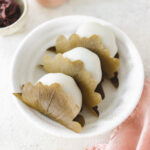
Kashiwa Mochi Recipe (Japanese Children’s Day Treat)
Soft, chewy, and filled with sweet red bean paste, this kashiwa mochi recipe is a beloved traditional treat enjoyed on Japanese Children's Day. These mochi are especially popular in the spring as new leaves begin to bud — a perfect metaphor for the holiday. Wrapped in a fresh oak leaf — a symbol of prosperity and renewal — these sweet rice cakes are as meaningful as they are delicious!
Servings: 4 pieces
Ingredients
- 4 kashiwa leaves oak leaves
- 1/2 cup filtered water
- anko red bean paste
- 100 grams joshinko japanese rice flour
- 1 tbsp organic cane sugar
- 1 tbsp potato or arrowroot starch
Instructions
- Prepare your oak leaf by rinsing and patting dry with a paper towel or kitchen linen.
- Next make your mochi dough by whisking joshinko, sugar and starch. Add your filtered water and using a spatula, mix to create a smooth batter.
- Cover the bowl with plastic wrap and microwave for 30 seconds. Remove from microwave and stir. Repeat 2 more times until a dough forms.
- Sprinkle joshinko onto a cutting board or working surface and gently knead the dough. You can also pound it until it becomes smooth and shiny, and easier to work with.
- Divide dough into 4 parts and roll into large circles. Take 1-2 tbsp of red bean paste and add it to the center of the circle then seal the edges tightly. Shape into more of a perfect circle once tightly sealed.
- Wrap with an oak leaf, vein side out and enjoy! They are best enjoyed the same day.
Video
@veggiekins Happy Children’s Day 😌🇯🇵✨🌸 #vegan #veganrecipes #gfdf #mochi #japanesefood #tiktokrecipes #foodontiktok #japanese #simplerecipe #beantok
♬ Dreamy Vibes - Ocean Bay Jazz
Notes
- Use the right flour: Make sure to use joshinko, not mochiko. Joshinko creates a smooth, pliable dough perfect for shaping; mochiko will yield a much stickier result.
- Adjust moisture carefully: If the dough feels dry or cracks, microwave it again briefly or add a splash of water. Too sticky? Dust with starch.
- Seal tightly: Be sure to pinch and smooth the mochi edges completely shut to keep the filling from leaking out during shaping or storage.
- Wrap vein-side out: Placing the oak leaf vein-side out is not just tradition—it also signals to others that it’s filled with sweet red bean paste, not a savory filling!